
Why every Meta ad campaign should start paused
A paused draft is the one moment you can check every setting of a Meta campaign for free. Here is what to review, and why later changes should wait for you too.
On this page · 6 sections
A Meta ad campaign should start paused because every setting in it can spend real money once it goes live, and a paused draft is the only point where you can check all of them for free. The method takes a few minutes. Build the full campaign first: objective, audience, daily budget, placements, creatives and landing page, with the status set to paused. Then read five things in order. What the objective tells Meta’s delivery system to look for. Who will see the ad, where and at what ages. How much it can spend per day. What people will see in each placement. Where the click leads. Publish only when all five match what you meant. After launch, apply the same rule to changes. A bigger budget, a new audience or a switched-off ad waits for your approval, because each edit spends money or can restart the learning phase.
TL;DR
- A paused campaign delivers nothing, so it spends nothing. It is the only free moment to catch a wrong setting.
- Check five points before publishing: objective, audience, daily budget, placements and creatives, destination.
- Meta reviews ads before they run, and each ad set enters a learning phase as soon as it goes live.
- Changes after launch deserve the same pause: Meta says edits to an ad set can trigger a new learning period.
- Adwize builds the whole campaign from one sentence and delivers it paused. Nothing spends until you publish.
What happens when a Meta campaign goes live?
Two things start at once. Meta reviews each ad before it runs, which its own guidance puts at about 24 hours, and every ad set enters a learning phase the moment it goes live. From then on, each setting you chose is spending money and teaching the algorithm.
The learning phase is a calibration period. Meta’s delivery system looks for the people who fit your objective and adjusts as results come in. Its guidance says learning stabilizes once an ad set gets at least 50 optimization events over 7 days.
That is why a wrong setting costs more than it looks. A mistyped age range or a budget with an extra zero does not only waste the spend. It also teaches the system to look for the wrong people, and fixing it later can restart learning.
What should you check before you publish?
Check five things, in this order: the objective, the audience, the daily budget, the placements and creatives, and the destination. Each one answers a simple question you can verify in a minute. If all five match your intent, publish. If one surprises you, fix it now, while it costs nothing.
The objective comes first because it tells Meta what to chase. A traffic objective looks for people who click; a sales objective looks for people who buy. The same audience and budget behave differently under each.
Then read the rest as a buyer would. Who sees this, and where? What does it cost per day, at most? What exactly shows up in the feed and in stories? And does the click land on the page you promised, with the offer the ad mentions?
| Setting | Question to ask | Typical mistake |
|---|---|---|
| Objective | What will Meta optimize for? | Traffic chosen when you want sales |
| Audience | Who sees it, where, at what ages? | Wrong country or age range |
| Daily budget | What is the most it spends per day? | An extra zero |
| Placements and creatives | What shows in the feed and stories? | A feed image cropped in stories |
| Destination | Where does the click land? | A page without the advertised offer |
Doesn’t reviewing everything cancel the time you saved?
No. The hours in a campaign go into preparing it, not into reading it. Writing hook variants, adapting them to each placement, building a clean structure and checking for overlap take the time. A review of a finished draft takes minutes, because the choices are already made.
What makes a review fast is how the draft is presented. If checking a campaign means opening six Ads Manager screens, nobody will do it properly. If the five points fit on one screen, in plain words, you read them the way you read an email.
You are also not deciding from scratch. You confirm or correct a proposal that explains itself: this audience because of that offer, this budget because of that goal. Correcting is faster than creating, and it keeps the final decision with you.
Why should changes after launch wait for approval too?
Because a change can cost more than the launch. Raising a budget, swapping an audience or turning off an ad all spend money or reshape delivery, and Meta’s guidance says changes to an ad set can trigger a new learning period. A pause before each change protects what the campaign has learned.
Meta advises keeping adjustments minor and avoiding significant edits. In practice, that means grouping changes instead of making one every morning, and knowing why you make each one before you make it.
So the rule should not stop at launch. A tool that watches your account can spot an ad that is fading or a cost that is creeping up, explain it, and propose a fix. The fix then waits for you. You approve it, change it or ignore it.
- Adwize proposes the change and says why
- You approve, edit or refuse it
- Only then does it reach your ad account
How does Adwize build a campaign that starts paused?
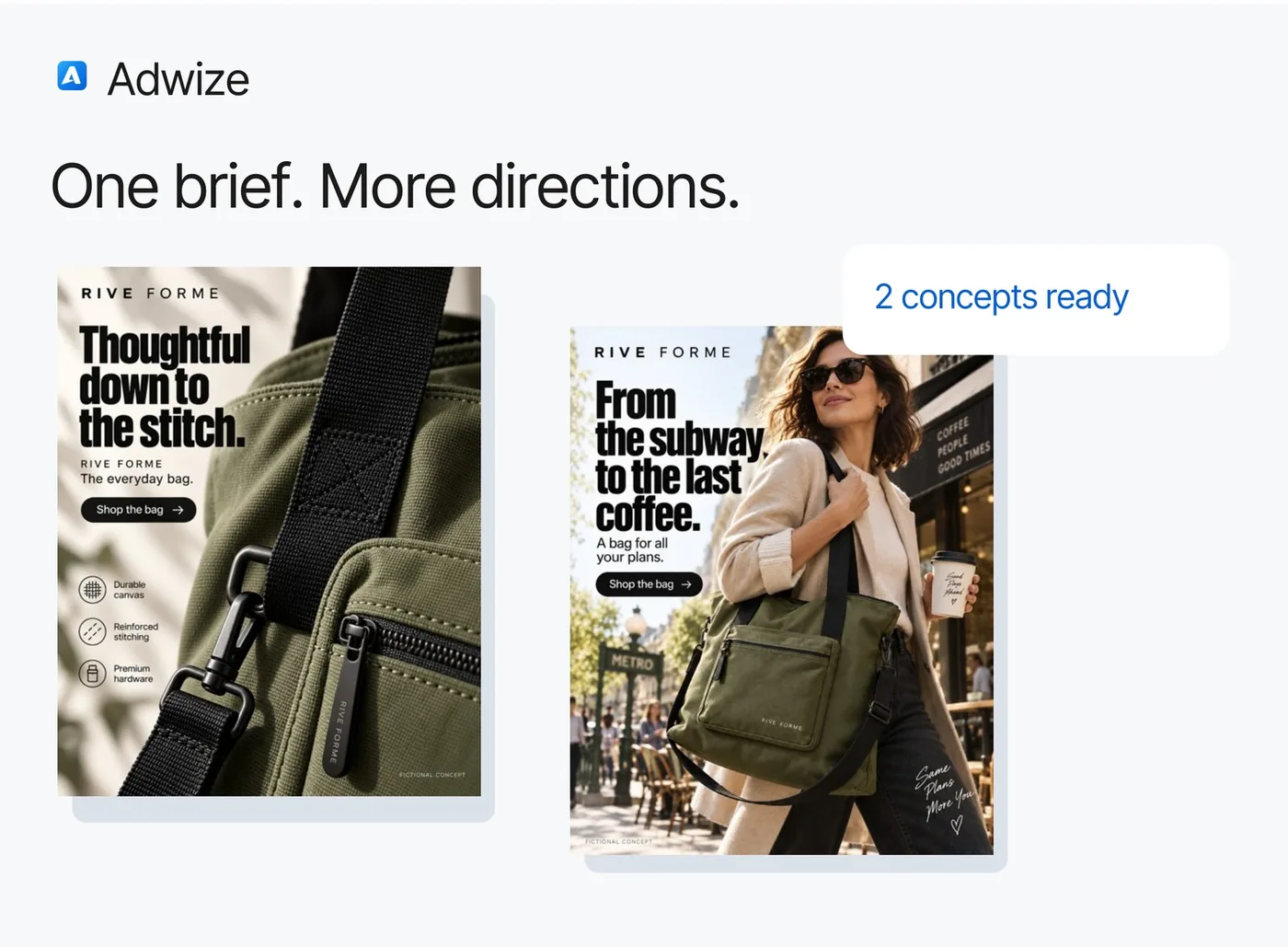
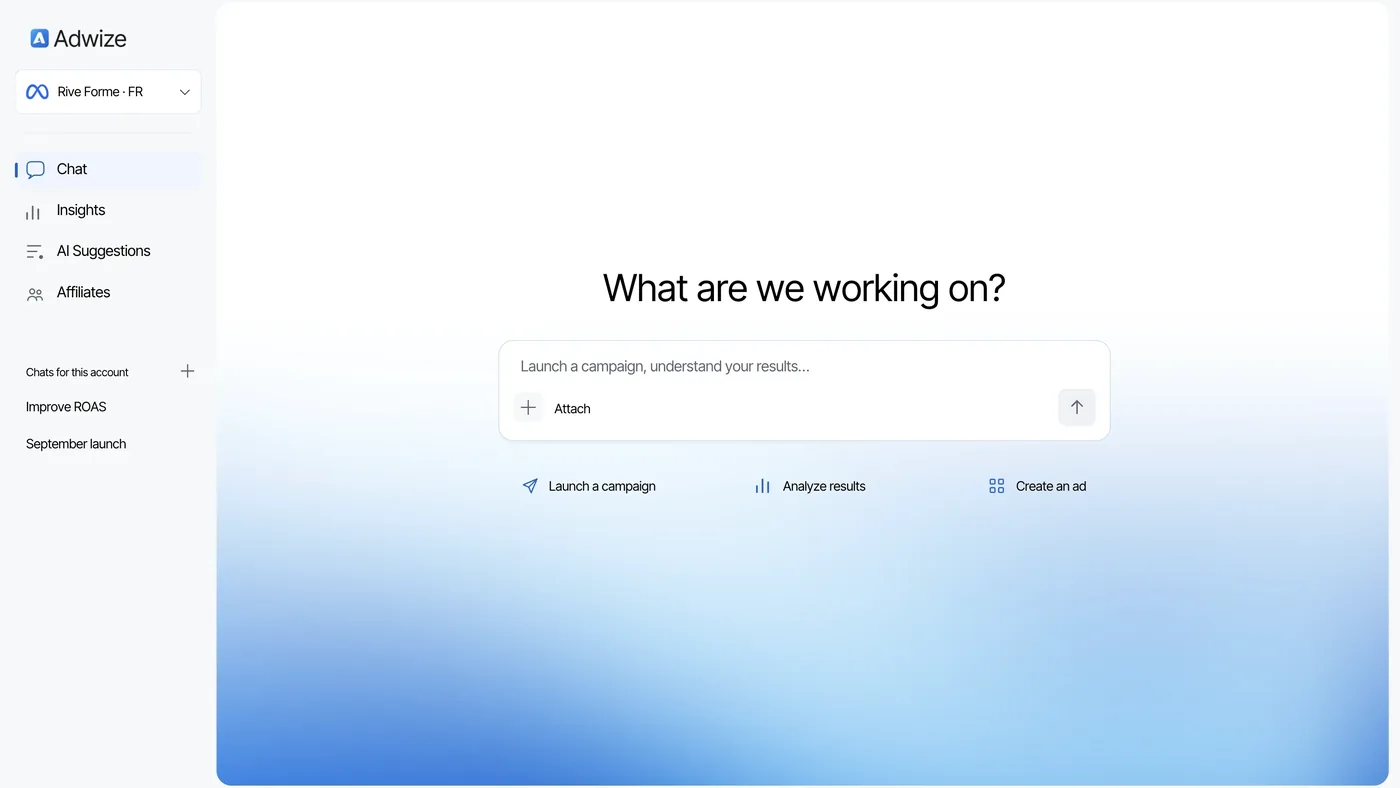
You describe what you sell in one sentence, the way you would tell a friend. Adwize fills in every setting of the campaign, prepares ads for each placement from your product photos, and creates it in your Meta account with a paused status. Nothing spends until you launch it.
The draft reads like the five-point check above. You can change anything before it goes live, in one sentence or by hand. The Launch page shows the three steps, from the sentence you type to the approval.
Access goes through Meta’s official login, so you never share a password, and you can revoke it anytime from Meta or from Adwize. Meta’s developer documentation confirms that people can revoke the permissions they gave an app in their settings at any time. To see a paused draft built on your own account, start a free trial.
When can you trust a tool that acts on its own?
Only after you have seen enough of its decisions to know they look like yours. That takes weeks. A tool that proposes before it acts lets you judge its reasoning from the first day, while a tool that acts alone asks for trust it has not earned yet.
Every proposal you read teaches you something about your account. You see why an audience was chosen, why a budget was set, why an ad should stop. After a few weeks, you approve faster, not because you check less, but because you know where the proposals come from.
It also keeps the damage small when something goes wrong. A bad suggestion that waits for approval costs you a minute of reading. A bad decision applied overnight costs you a day of spend.
Frequently asked questions
Does a paused Meta campaign cost anything?
No. A paused campaign does not deliver ads, so there is nothing to bill. Meta’s Marketing API lets an ad set be created paused from the start, and it can stay that way while you review it.
How long does Meta take to review an ad?
Meta’s guidance says ads go through a review period of approximately 24 hours before going live. Plan your launches with that delay in mind.
Will editing a live campaign restart its learning phase?
It can. Meta says changes to an ad set can trigger a new learning period and advises avoiding significant edits. Group your changes and make them on purpose.
Can Adwize publish a campaign without me?
No. Every campaign Adwize creates arrives paused, and every later change waits for your approval in the chat.
Can I remove Adwize’s access to my Meta account?
Yes, anytime, from Meta or from Adwize. You connect through Meta’s official login, so no password is shared.
Sources
- Meta Horizon OS Developers: Launching your first ad campaignAccessed 09/24/2026
- Meta Horizon OS Developers: Understanding and optimizing your ad campaignAccessed 09/24/2026
- Meta Marketing API reference: Ad SetAccessed 09/24/2026
- Meta for Developers: Requesting and revoking permissionsAccessed 09/24/2026