Facebook ad testing: how to test creatives without wasting budget
Most creative tests fail before they start: too many ads, too little budget, too many changes at once. Here is a simpler way to learn what works.
On this page · 6 sections
For Facebook ad testing that does not waste budget, change one element at a time and give each version a fair share of spend. Start with the hook, the first line or first second people see, because it decides whether anyone sees the rest. Put three or four versions of that hook on the same visual in one ad set, keep the audience and budget unchanged, and decide before launch which number will pick the winner, usually cost per result. Let the test run long enough to judge, a full week when you can, instead of reacting to the first day. When one version clearly leads, keep it, switch off the others, and write down what it taught you. Then test the next layer: the visual, then the offer, then the format. For a cleaner split, Meta’s A/B testing divides the audience so the groups do not overlap.
TL;DR
- Test one variable at a time. Meta’s own testing guidance says to select only one variable per test.
- Start with the hook. Three or four hooks on one visual teach more than eight different ads.
- Pick the deciding metric before launch, usually cost per result. CTR explains; it does not decide.
- Larger reach, longer schedules and higher budgets make results more reliable, according to Meta.
- Adwize writes on-brand variants and tells you when a test has enough data to call.

Why does most Facebook ad testing teach you nothing?
Because they change too many things for too little money. You launch eight new ads on Monday, two take almost all the spend, six barely run, and the two that ran differ in five ways at once. You pick a winner, but you cannot say why it won.
Spend inside an ad set rarely spreads evenly between ads. Some get most of the delivery, others hardly any, so part of your test never gets a fair look. That is fine for results, and confusing for learning.
A useful test answers one question. Everything else in the setup, from the number of ads to the budget and the date range, exists to protect that question. If you cannot say the question in one sentence before launch, the test is not ready yet.
Which part of the ad should you test first?
Test the hook first. It is the first line people read and the first second of a video, and it decides whether anyone sees the rest. Three hooks on the same visual will teach you more than three ads that differ in every way.
Meta’s split testing documentation is direct about this: select only one variable per test. If the visual, the text and the offer all change together, a better result can come from any of them, and the next round starts from a guess.
Once a hook holds, keep it and test visuals underneath it. Then test the offer, then the format. Each round builds on a known winner, so what you learn adds up instead of resetting every time.
How many ads and how much budget does a test need?
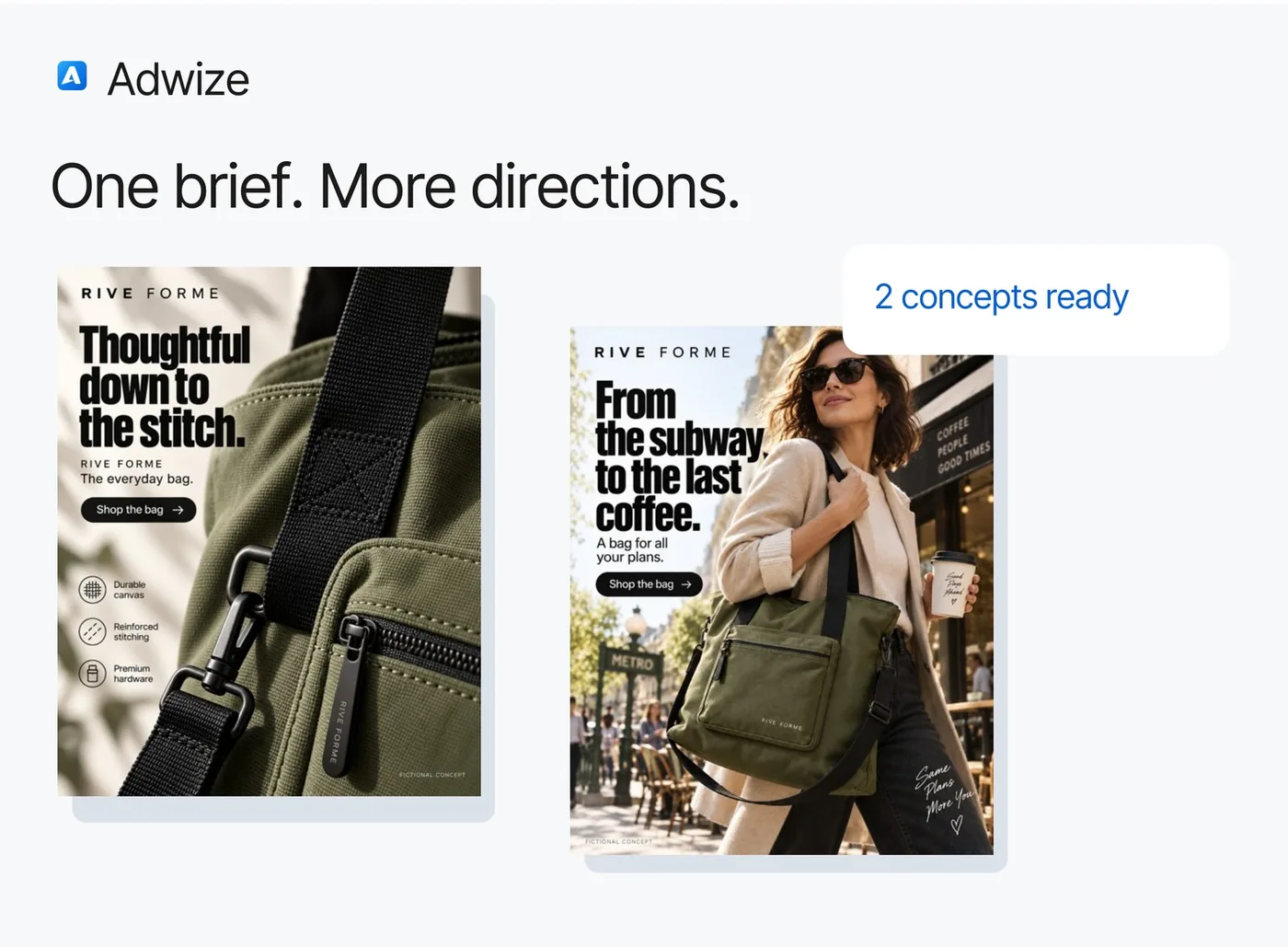
Fewer ads than you think, with more time than you think. Three or four ads per ad set is plenty for most budgets. Beyond that, the spend spreads too thin for any of them to show a pattern you can trust.
If your budget is small, test fewer things rather than smaller things. Two ads that each get a real chance beat six ads that each get a crumb. Meta notes that tests with larger reach, longer schedules or higher budgets tend to deliver more statistically significant results.
Keep the rest of the setup still while the test runs. Meta’s guidance says changes to an ad set can trigger a new learning period, so editing the audience or budget halfway through muddies the very comparison you were running.
How long should creative testing on Facebook ads run?
Long enough to judge, which usually means a full week. The first day is noisy: delivery is still settling, and a handful of clicks can swing every metric. Decide the minimum duration before launch so the first bad afternoon does not end the test.
Meta’s guidance says learning stabilizes with at least 50 optimization events over 7 days per ad set. That number is a useful reference. If your test cannot come close to it, the ads may still be learning when you read the results, and the differences can be noise.
Decide what better means before you launch. Usually it is cost per result. Click-through rate helps you understand why a version leads, but it does not pay the bills. Turn off an ad when it has spent enough to judge and is clearly behind.
- Ads per ad set
- = 3 or 4
- Variable per test
- = one, the hook first
- Minimum duration
- = a full week, set before launch
When should you use Meta’s A/B test instead?
When you need a clean answer on one variable and have the budget for it. Meta’s A/B testing divides the audience automatically and ensures the groups do not overlap, so each version reaches different people. Ads in the same ad set, by contrast, compete for the same audience.
Meta’s testing documentation lists what you can compare: audience types, delivery optimization, placements, ad creative, budgets and more. It recommends defining your key metrics with your team before you create the test.
The trade-off is cost. A formal test holds budget in each group until the end, even when one version is clearly behind. For quick hook checks, a single ad set is often enough. For decisions you will build on for months, the cleaner split is worth it.
| Method | How spend is split | Best for | Watch out for |
|---|---|---|---|
| Several ads in one ad set | Delivery favors some ads | Quick hook checks | Some ads barely run |
| Meta A/B test | Separate groups, no overlap | One decisive variable | Budget held until the end |
| One ad set per version | Each has its own budget | Rarely worth it | Overlap and split learning |
How does Adwize help you run cleaner tests?
It writes the variants and watches the results, and you keep the decision. Adwize builds ads from your website in your colors, fonts and tone, so each variant stays on-brand and only the part you are testing changes. You can edit any word before it runs.
Once the test is live, Adwize checks results every morning and tells you which ads are losing money and why, in one plain sentence. You approve the fix in one click or ignore it. The Create page shows how variants are made, and the Optimize page how losers are flagged.
When a winning ad starts to wear out, you get a heads-up with fresh versions ready. If you want to run your next test this way, start a free trial and connect your ad account.
Frequently asked questions
How many creatives should I test at once on Meta?
Three or four per ad set is plenty for most budgets. With a small budget, test two and give each a real chance.
How long should a Meta creative test run?
Usually a full week. Meta says learning stabilizes with at least 50 optimization events over 7 days per ad set, so shorter tests can mislead.
Should I judge a creative test on CTR or cost per result?
Cost per result. Click-through rate tells you whether the hook earns attention, but cost per result tells you whether the ad pays.
Is Meta’s A/B test better than putting ads in one ad set?
For a clean answer, yes: the groups do not overlap. For quick hook checks on a small budget, one ad set is usually enough.
Can Adwize create the variants for me?
Yes. It builds them from your website, in your colors, fonts and tone, and you approve what runs.
Sources
- Meta Marketing API: Split testingAccessed 09/24/2026
- Meta Horizon OS Developers: Understanding and optimizing your ad campaignAccessed 09/24/2026