Google Ads vs Facebook Ads: which one should you choose in 2026?
Google Ads captures demand that already exists; Meta ads on Facebook and Instagram create it. Here is how to choose by offer, budget, sales cycle and creatives, and when to run both.
On this page · 8 sections
- What is the difference between Google Ads and Facebook Ads?
- Is Google Ads or Facebook Ads better for your offer?
- How much budget do you need for Google Ads vs Facebook Ads?
- Why is comparing average CPC between Google and Meta misleading?
- How many creatives does each platform need?
- How does your sales cycle change the choice?
- When should you run Google Ads and Facebook Ads together?
- Does Adwize run Google Ads?
Google Ads vs Facebook Ads is a choice between capturing demand and creating it. Google Ads shows your ad when someone searches for terms related to what you sell, so you pay to meet people who are already looking. Facebook Ads, now bought as Meta ads for Facebook and Instagram, reach people chosen by their interests, behaviors and demographics before they search. Meta reported 3.60 billion daily active people across its apps in June 2026. Start with Google when people already search for your offer and a text ad can sell it. Start with Meta when your product is new, visual or bought on impulse, and you can produce images and videos. Add the second channel once your budget can feed it: on Meta, an ad set usually leaves its learning phase after about 50 results in a week. Adwize only works with Meta ads, so it covers the Facebook and Instagram side, not Google.
TL;DR
- Google Ads meets people while they search for what you sell; Meta ads reach people by interests and behavior before they search.
- Check demand first: if Google Keyword Planner shows real monthly searches for your offer, start on Google.
- On Meta, budget for about 50 results a week per ad set, the point where learning usually ends.
- Search ads run on text; Meta ads run on images and videos you must keep refreshing.
- Adwize only works with Meta ads: it handles Facebook and Instagram, not Google.
What is the difference between Google Ads and Facebook Ads?
Google Ads captures demand that already exists, and Facebook Ads creates it. On Google, your ad can appear when someone searches for terms related to your product. On Meta, which runs Facebook and Instagram ads, you reach people by their interests, behaviors and demographics, whether or not they are looking yet.
Google Ads Help puts it plainly: your keywords decide which searches can show your ad, and with cost-per-click bidding you pay only when someone clicks. The person typed the need; your job is to be the best answer.
Meta works from the other end. Its detailed targeting draws on the ads people click, the Pages they engage with and the apps they install. Nobody asked for your product; your ad has to make them want it.
The line is not perfectly clean. Google’s Demand Gen campaigns run feed-style ads on YouTube, Discover, Gmail and Maps. Meta sells placements in Facebook and Instagram search results, but you cannot bid on the words people type. The real question is not which network is better, but whether your buyer searches before buying.
| Criterion | Google Ads | Meta ads (Facebook, Instagram) | Lean toward |
|---|---|---|---|
| Demand | Captures searches that already exist | Creates demand before people search | Depends on your offer |
| Targeting | Keywords people type | Interests, behaviors, demographics | Google for intent, Meta for reach |
| Creative | Text for Search, product photos for Shopping | Images and videos, refreshed often | Google Search if you lack visuals |
| Daily budget rule | Up to 2× a day, 30.4× a month | Up to 75% over, 7× a week | Similar |
| Learning | Up to ~50 conversions for smart bidding | About 50 results a week per ad set | Google Search, buying clicks |
| Sales cycle | Researched or urgent purchases | Impulse and visual purchases | Both for long cycles |
| Run by Adwize | No | Yes | Meta side only |
Is Google Ads or Facebook Ads better for your offer?
It depends on whether people already search for your offer. If they type it into Google, Google Ads puts you in front of that intent. If they do not know your product exists, there is nothing to search for, and Meta is where you create the want. Answer these four questions in order.
- Does anyone search for it? Open Google Keyword Planner: it shows estimates of the monthly searches a keyword gets and the cost to target it. Real volume on phrases like “emergency plumber” or “divorce lawyer near me” points to Google.
- Does it sell on sight? Clothing, food, gadgets or home decor sell well in a feed. A service that needs a quote rarely does.
- Can your budget feed Meta’s learning phase? If it cannot buy about 50 results a week for one ad set, optimize for an earlier step or start on Google. The next section shows the math.
- How long does the buyer take? An impulse buy can close in one Meta session. A long, researched purchase leans on search at the moment of comparison.
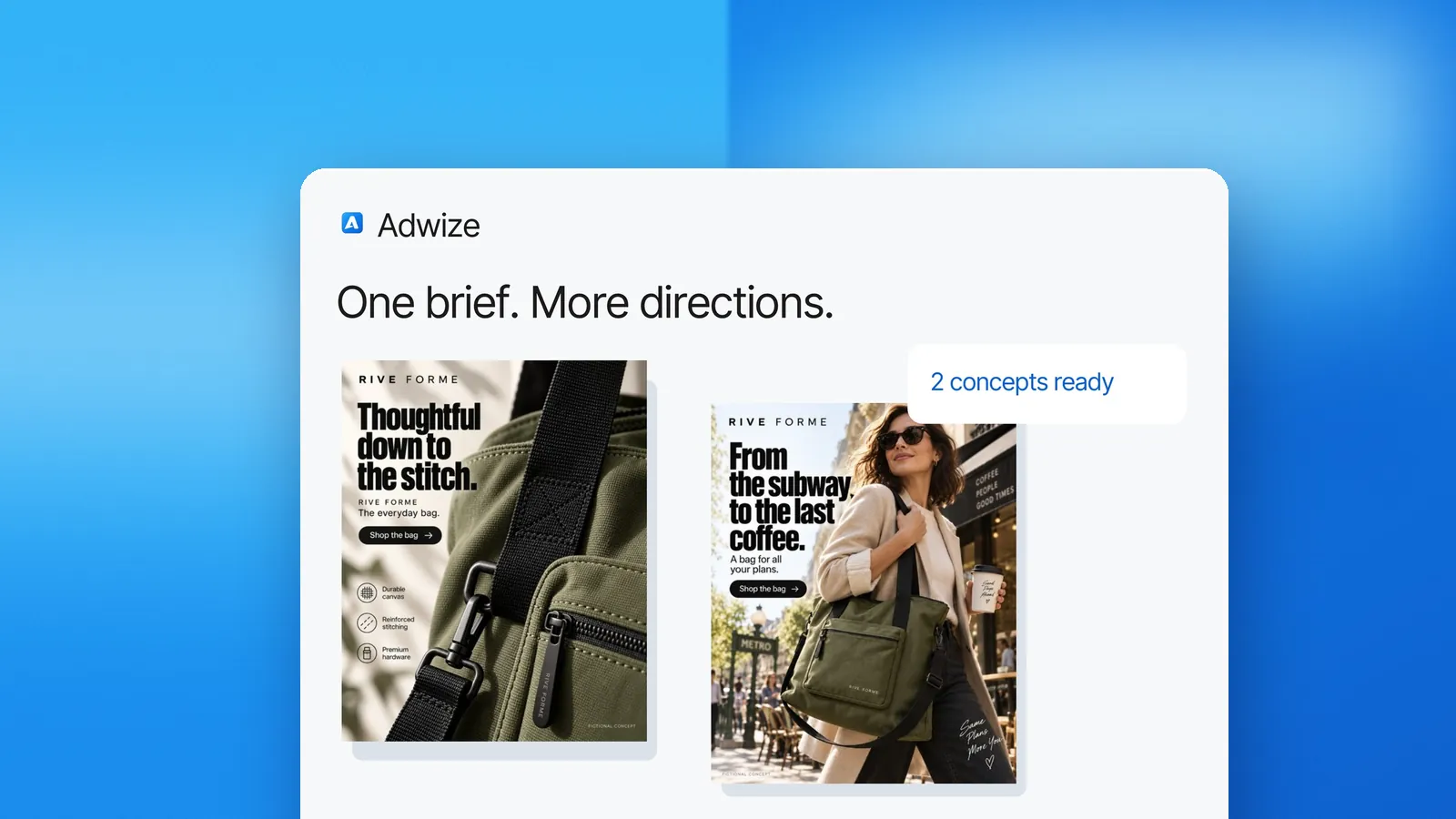
Example (illustrative): a family lawyer in Austin gets calls from people who search “family lawyer Austin.” Nobody scrolls Instagram to find a lawyer, so Google comes first. Rive Forme, a fictional bag brand, has the opposite problem: people search “canvas tote bag,” but nobody searches for a brand they have never heard of. Meta builds that brand demand first, with three starter audiences and no purchase history; Google Shopping can catch the category searches once the product feed is ready.
- Do people search for it? Yes: start on Google
- Does it sell on sight? Yes: start on Meta
- Can the budget buy about 50 results a week on Meta?
- Long cycle? Add the second channel once the first works
How much budget do you need for Google Ads vs Facebook Ads?
Both treat your daily budget as an average. Google may spend up to twice your average daily budget on a given day, but no more than 30.4 times it in a month. Meta may spend up to 75% over your daily budget on a day, but no more than 7 times it in a week.
The bigger constraint on Meta is learning. Meta says an ad set usually leaves the learning phase after about 50 results in the week after its last significant edit, and that until then delivery is less stable and cost per result is usually higher. Your budget has to buy those 50 results, per ad set.
Example (illustrative numbers): if a purchase costs you about $30 on Meta, 50 purchases take about $1,500 a week, or roughly $214 a day for one ad set. At $100 a day you would get about 23 a week, and the ad set would likely show “Learning limited.” Two fixes: run fewer ad sets, or optimize for a cheaper event such as add to cart until volume builds.
Google learns too. Its conversion-based bid strategies, such as Maximize Conversions, can take up to around 50 conversion events or 3 conversion cycles to calibrate. So Google’s edge on a thin budget holds while you buy clicks on a few precise, high-intent keywords, priced in advance with Keyword Planner. To size the Meta side with your own costs, use the Facebook ads cost calculator.
- Weekly budget to exit learning
- = ≈ 50 × cost per result
- Example at $30 per purchase
- = 50 × $30 = $1,500 a week
- Per day, for one ad set
- = $1,500 ÷ 7 ≈ $214
Why is comparing average CPC between Google and Meta misleading?
Because a click does not mean the same thing on each side. A Google search click comes from someone who typed a need; a Meta feed click comes from someone you interrupted. Published averages also mix countries, industries and objectives. Stop choosing a network from an average CPC. Compare cost per result on your own account instead.
For reference, LocaliQ’s 2026 benchmarks, cross-industry figures from its own campaign data: search ads on Google and Microsoft averaged $5.42 per click and $66.69 per lead (published June 1, 2026). Facebook lead campaigns had a median of $1.80 per click and $27.39 per lead, and traffic campaigns a median of $0.60 per click (published September 23, 2026; WordStream, which publishes the same data, specifies that these are medians). Every source is compared in our Facebook ads benchmarks by industry.
So Meta looks cheaper per lead on paper. But the two leads are not the same person at the same moment, and a cheap lead that never buys is the most expensive one. Prices also move: in Q2 2026, Meta reported ad impressions up 14% year over year and average price per ad up 12%.
Compare these three instead:
- Cost per result: a lead, a booked call or a purchase, counted the same way on both platforms.
- ROAS: revenue divided by ad spend, set against your break-even. The ROAS calculator gives you both.
- CPM for reach: when you pay for attention rather than clicks, cost per 1,000 impressions is the fair unit. The CPM calculator turns spend and impressions into CPM.
How many creatives does each platform need?
Google Search runs on words; Meta runs on pictures and video. A responsive search ad takes up to 15 headlines of 30 characters and up to 4 descriptions of 90 characters, with at least 3 headlines and 2 descriptions. A Meta ad needs an image or a video that stops the scroll, and several of them to test.
On Meta, the image is the first thing people judge, so you need several angles on one offer, and new ones when results fade.
E-commerce is the exception on Google. Shopping ads show a product photo, title, price and store name, drawn from your Merchant Center product data rather than keywords, and Performance Max uses images, videos and feeds across Search, YouTube, Display, Discover, Gmail and Maps. With product photos, both networks can run on the same images.
If you have no photos, no video and no time to make them, start on Google Search. If you can produce visuals every week, Meta’s reach becomes usable. Check formats and sizes in the Meta ads specs, and test new visuals with a method that does not waste budget.


How does your sales cycle change the choice?
Short cycles favor Meta, long researched cycles favor search, and most real funnels need both touches. An impulse product can go from first view to purchase in one Meta session. A B2B service or a high-ticket purchase is compared over weeks, and buyers search at each step.
- Short cycle, low price, visual product: Meta first. The ad creates the want and the checkout closes it.
- Long cycle, quote or demo: Google Search first, where people compare options by name. Add Meta retargeting to stay visible between searches.
- Urgent local service: Google first. People search when the pipe bursts, not before.
Long cycles also make measurement harder, since the sale comes days after the click. On Meta, send leads and purchases from your server with the Conversions API.
When should you run Google Ads and Facebook Ads together?
Run both once one channel works and your budget can feed the second without starving the first. The classic pairing: Meta introduces the product to people who never searched for it, and Google catches them later when they search for your brand or category. Starting both at once on a thin budget leaves each one short.
- Start on the channel that fits your offer, using the four questions above.
- Keep it until it brings results at a cost you can afford, week after week.
- Add the second channel with its own budget, sized to its own rule: enough clicks on your keywords for Google, about 50 results a week per ad set for Meta.
- Judge each channel on cost per result, not on which one got the last click.
What to stop doing: splitting a small budget 50/50 across Google and Meta from day one, and moving money back and forth every few days. Meta warns that frequent budget changes can send an ad set back into the learning phase.
Does Adwize run Google Ads?
No. Adwize only works with Meta ads, on Facebook and Instagram. It does not run Google, TikTok or LinkedIn ads. If Google Search is your main channel, manage it in Google Ads itself or with a Google specialist, and use Adwize for the Meta side of your plan only.
On that side, Adwize launches Meta campaigns from one sentence (objective, audiences, budget and ads), shown for your approval before anything goes live. It creates ad visuals and copy in your brand style and reads running campaigns to propose changes. Nothing is spent without your yes.
Plans are billed monthly or yearly, and you can cancel anytime: get started with Adwize. To compare Adwize with other tools built for Meta, read our review of the best AI tools for Meta ads.
Frequently asked questions
Is Google Ads or Facebook Ads cheaper?
On published benchmarks, Meta looks cheaper: LocaliQ’s 2026 benchmarks put search ads at an average of $66.69 per lead and Facebook lead campaigns at a median of $27.39. But a search lead typed the need and a Meta lead was interrupted, so compare cost per sale on your own account.
Which is better for a small business with a small budget?
Start with one channel. If people search for your service locally, a few precise Google keywords are the lighter start. If your product sells on sight, start on Meta with a single ad set that can reach about 50 results a week, or optimize for a cheaper event.
Are Meta ads and Facebook ads the same thing?
Yes. Facebook ads are now bought as Meta ads, in Meta Ads Manager. Depending on your objective, they can run on Facebook, Instagram, Messenger, WhatsApp, Threads and Meta Audience Network.
Can Google Ads and Facebook Ads work together?
Yes, once one channel works: Meta introduces your product, and Google catches the people who later search your brand. Give each its own budget and judge both on cost per result.
Does Adwize manage Google Ads?
No. Adwize only works with Meta ads on Facebook and Instagram. It does not run Google, TikTok or LinkedIn ads.
Sources
- Google Ads Help: Using Google Ads for online marketingAccessed 09/24/2026
- Google Ads Help: About overdelivery and your average daily budgetAccessed 09/24/2026
- Google Ads Help: About responsive search adsAccessed 09/24/2026
- Google Ads Help: Use Keyword PlannerAccessed 09/24/2026
- Google Ads Help: About Demand Gen campaignsAccessed 09/24/2026
- Meta Business Help Center: About detailed targetingAccessed 09/24/2026
- Meta Business Help Center: About daily budgetsAccessed 09/24/2026
- Meta Business Help Center: About the learning phaseAccessed 09/24/2026
- Google Ads Help: About Shopping adsAccessed 09/24/2026
- Google Ads Help: About Performance Max campaignsAccessed 09/24/2026
- Google Ads Help: Duration of the learning period for campaigns and what affects itAccessed 09/24/2026
- Meta Business Help Center: About ad placements across Meta technologiesAccessed 09/24/2026
- LocaliQ: Search Advertising Benchmarks for Every Industry, 2026 data (published June 1, 2026)Accessed 09/24/2026
- LocaliQ: Facebook Advertising Benchmarks for 2026 (published September 23, 2026)Accessed 09/24/2026
- Meta Investor Relations: Meta Reports Second Quarter 2026 Results (July 29, 2026)Accessed 09/24/2026